Talent Acquisition Strategy
Most organizations begin thinking about retention after an employee has accepted a job offer. By then, many of the factors that influence long-term success have already been decided.
My approach begins much earlier.
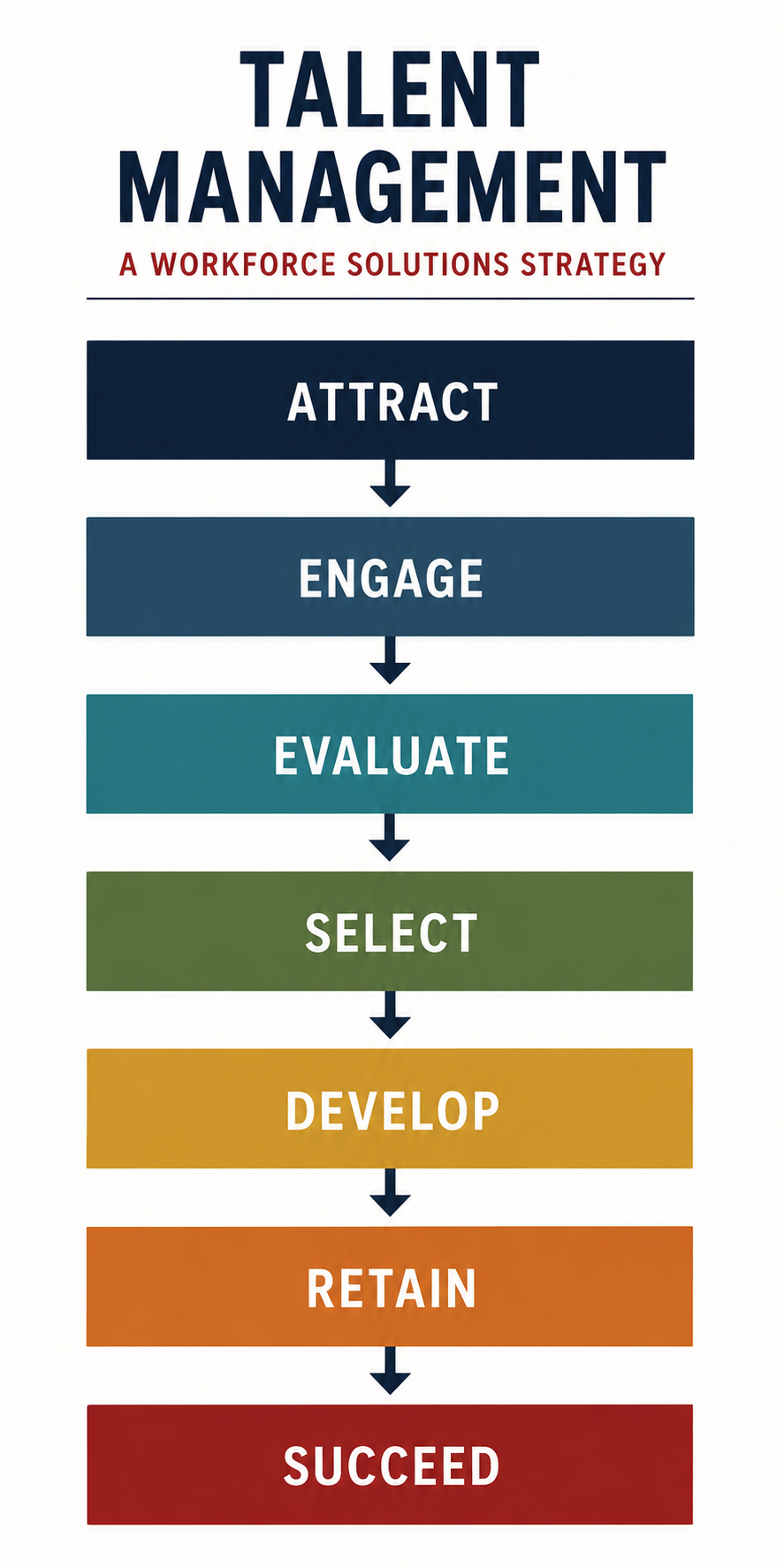
Talent acquisition is not simply recruiting qualified candidates. It is intentionally helping prospective employees determine whether the organization, the profession, the community, and the lifestyle are the right fit before an offer is ever made. The objective is not to hire the greatest number of people—it is to hire the right people.
That philosophy changes every part of the process.
Recruiting extends beyond salary and benefits to include housing, schools, cost of living, career opportunities for spouses, quality of life, organizational culture, advancement potential, and the expectations of the profession itself. Candidates receive a realistic picture of both the opportunities and the demands of the job so they can make informed career decisions.
This approach recognizes that today's workforce often chooses where they want to live before deciding where they want to work. Organizations that understand this shift are better positioned to attract professionals who are not simply seeking employment, but searching for a place to build a career.
The strategy continues after selection through structured onboarding, organizational indoctrination, mentorship, and professional development. Rather than treating recruitment and retention as separate challenges, they become components of a single workforce strategy designed to produce long-term organizational stability.
How I Can Help
Talent acquisition strategy development
Recruitment campaign design
Candidate experience and engagement
Prospective employee information guides
Organizational culture messaging
Executive and lateral recruitment
Workforce branding and positioning
Long-term retention strategy